Confirm the can and end system
Provide can-body and can-end standards, dimensions, materials, samples and intended supplier sources before equipment is finalized.
- Can specification
- End specification
- Seam standard
- Sample availability
A can project is more than a filler-seamer. Empty-can handling, can-end supply, seam quality, product condition, conveyance and pack format are essential parts of the equipment scope.
A preliminary can route includes depalletizing, empty-can transfer and rinsing, product supply, filling, lid feeding, seaming, seam inspection, conveying, coding and the selected tray, film, carton or case pack.
The can end and seam method cannot be left until after filler selection.
| Decision | Confirm | Acceptance evidence |
|---|---|---|
| Can supply | Can body, pallet pattern and rinse policy | Approved can samples |
| Product filling | Temperature, carbonation and fill target | Representative trial basis |
| End and seam | End specification and tooling | Seam measurement standard |
| Finished can | Leak/seam inspection and pack format | Reject and secondary-pack plan |
The supplier proposal should show how the controlled can/end pair moves through every quality decision and how doubtful product is contained.
| Quality gate | Controlled input | Process evidence | Disposition record |
|---|---|---|---|
| Incoming can and end | Drawings, coating, pallet/end packaging and accepted samples | Storage, damage and contamination controls | Accept, quarantine or reject criteria |
| Empty-can handling | Depalletizing, rinse policy and transfer limits | Damage checks and controlled container flow | Rejected-can route |
| Fill condition | Product temperature/carbonation and fill target | Reference test method and startup state | Good, rework or hold boundary |
| Seam formation | Matched can, end, tooling and setup procedure | Recorded setup and monitored conditions | Seam-release record |
| Finished-can inspection | Fill, closure, leak and code defects as required | Challenge and sampling plan | Reject, stop and containment logic |
Decision boundary: Final seam standards, sampling and release rules belong to the project quality plan and the approved can/end system.
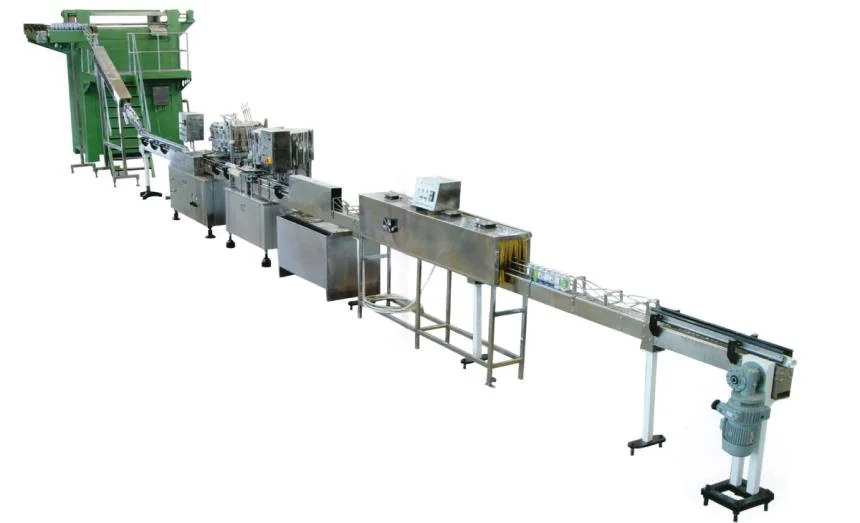
Provide can-body and can-end standards, dimensions, materials, samples and intended supplier sources before equipment is finalized.
Still, carbonated and other beverages require different product-feed and filling conditions. Product temperature and carbonation cannot be separated from the filler selection.
Seam tooling, checks, records, reject logic and operator competence should be defined in the project, not assumed after startup.
Every equipment decision has an upstream condition, a current function and a downstream handoff.
Depalletized and rinsed cans plus prepared product.
Fill, feed ends and create the confirmed seam.
Inspect, code, buffer and build the commercial pack.
The supplied Allot Tech 2026 catalog supports named equipment groups such as water treatment, beverage preparation, CIP, bottle handling, filling platforms, labeling, conveying and secondary packaging. It does not make every module mandatory for every project.
Company identity, contact route, named equipment categories and catalog reference flows.
Application routes and model-family context from the supplied catalog.
Output, power, dimensions, materials, components, process conditions, availability, price and service scope.
Invented performance, price, certifications, projects, reviews, factory claims or guarantees.
These answers frame the equipment decision. The final process and equipment remain project-specific.
Not without a common reference container, operating basis and good-output definition.
The inspection method and responsibility must be defined for the project; it should not be left as an unstated assumption.