Mr Kcal · Allot Tech (Suzhou) Co., Ltd.
Equipment selection & integration

Downstream Packaging Equipment From Inspection to Pallet

The downstream scope protects good output after closing. It must match the container, label, code, pack pattern, accumulation plan and warehouse handoff rather than copy the filler speed.

Direct answer

What equipment is needed after filling and closing?

A typical path may include inspection, product-specific post-fill treatment, bottle drying, labeling, coding, conveyors, secondary packing and pallet handling. The required modules depend on beverage, container and market pack.

Purchase decision evidence

Protect accepted product after the filler.

Inspection, drying, labeling, coding and secondary packing must be selected on the actual container and market pack.

DecisionBuyer inputEvidence to request
Quality checksDefects and reject policyInspection and containment plan
Decoration and codingLabel, code and container samplesApplication trial and readable-code basis
Secondary packPack pattern and consumablesApproved pack sample and sustained rate
End-of-line handoffPallet and warehouse routeFinished-pack flow and responsibility
Decoration-to-pallet decision matrix

Choose downstream equipment from the accepted container and commercial pack.

Downstream scope begins with quality status at filler discharge and ends at a named warehouse handoff. Label type and pack format change machine, consumable and buffer requirements.

Decision blockOptions to screenBuyer evidenceInterface to close
Container qualityFill/closure, leak, seam, code or vision checks as requiredDefect library, reject rule and containment planAccept/reject signal and physical reject path
Surface conditionDrain, warm, cool or dry before decorationContainer temperature, condensation and label requirementDefined condition at labeler inlet
Label applicationSelf-adhesive, sleeve or hot-melt routeContainer and label samples, artwork and application areaConsumable specification and change-parts matrix
Secondary packLoose, shrink-only, tray plus film, carton or caseApproved pack drawing, count and distribution dutyGood-pack rate and reject/rework route
Pallet handoffManual handling, palletizer, wrapper and warehouse transferPallet pattern, height, load and storage routeStable load and responsibility boundary

Decision boundary: A downstream machine should not be selected from filler nameplate speed alone. Use the same reference SKU, accepted pack and stop/accumulation boundary.

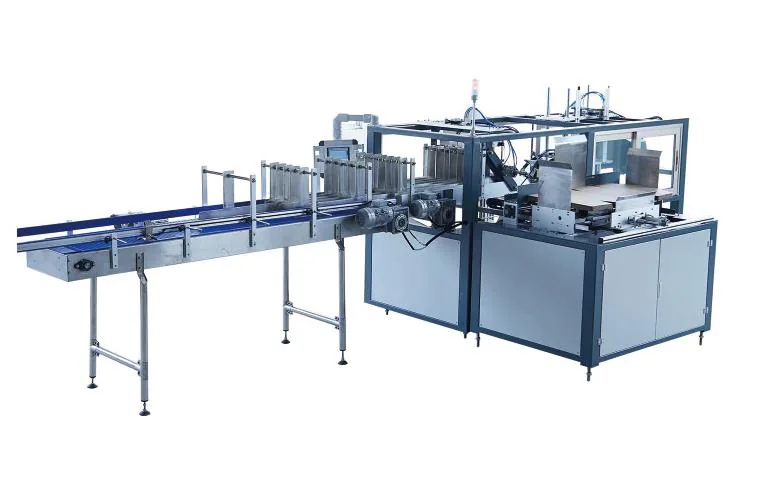
Automatic beverage carton packing machine with product conveyor
Beverage carton packing machineCarton packing reference; the final method depends on product geometry, board and pack pattern.
01

Protect quality before decoration

Check closure, seam, fill level, leakage or product-specific conditions before adding labels and packs that can hide a defect.

  • Inspection responsibility
  • Reject handling
  • Bottle drying where needed
  • Post-fill treatment boundary
02

Match labeling and coding

Label material, application method, code content, code position and container surface must be confirmed with real samples.

  • Self-adhesive, sleeve or hot-melt
  • Dry surface requirement
  • Code legibility
  • Changeover and consumables
03

Build the commercial pack

Shrink film, tray plus film, cartons, cases and pallet patterns create different machines, buffers, labor and utility needs.

  • Pack matrix
  • Good-pack output
  • Film or carton specification
  • Warehouse and pallet route
Equipment dependency

Read the page as a connected equipment graph.

Every equipment decision has an upstream condition, a current function and a downstream handoff.

01Upstream

Closed containers arrive with a stable pitch and defined quality status.

02Current equipment

Inspect, decorate, code, group and protect saleable units.

03Downstream

Deliver counted packs or pallets to the finished-goods area.

Evidence boundary

Catalog reference where supported. Project confirmation where required.

The supplied Allot Tech 2026 catalog supports named equipment groups such as water treatment, beverage preparation, CIP, bottle handling, filling platforms, labeling, conveying and secondary packaging. It does not make every module mandatory for every project.

VERIFIED

Company identity, contact route, named equipment categories and catalog reference flows.

REFERENCE

Application routes and model-family context from the supplied catalog.

REQUIRES CONFIRMATION

Output, power, dimensions, materials, components, process conditions, availability, price and service scope.

PROHIBITED

Invented performance, price, certifications, projects, reviews, factory claims or guarantees.

Buyer questions

Frequently asked questions

These answers frame the equipment decision. The final process and equipment remain project-specific.

Should the packer match the filler nameplate exactly?

No. Product flow, accumulation, micro-stops, changeovers and accepted good output must be considered.

Is palletizing always required?

No. It depends on pack format, output, labor plan, warehouse flow and automation level.

Next purchase decision

Send the known facts. Keep every unknown visible for technical confirmation.

Map My Packaging ScopeTalk About My Project →