Mr Kcal · Allot Tech (Suzhou) Co., Ltd.
Equipment selection & integration

Core Filling & Closing Equipment Inside the Complete System

The filling center is where product and container streams meet. Its correct selection depends on beverage condition, container, closure, output basis and the equipment immediately before and after it.

Direct answer

Which filling equipment belongs in my project?

Use the beverage condition and package first: still products may use atmospheric or other product-suitable filling, carbonated products require a pressure-controlled route, hot-filled products require compatible containers and post-fill handling, and cans require filling plus seaming.

Purchase decision evidence

Choose the filling route before comparing valve count or price.

Product condition and package compatibility eliminate unsuitable machine types before model selection begins.

Selection gateConfirmSupplier evidence
Product behaviorStill/carbonated, viscosity, particles and foamDeclared application window and trial basis
Filling conditionAmbient, hot, cold, pressure or aseptic requirementApproved process handoff at filler inlet
Container and closurePET, glass or can drawings and samplesFormat range, change parts and closure method
Output claimOne reference SKU and good-output boundaryRated and acceptance conditions separated
Filling-route screening matrix

Eliminate unsuitable filling routes before discussing a model.

Use one controlled product and package basis. The table identifies the evidence needed to screen a route; it does not prescribe a final machine.

Project conditionRoute to evaluateEvidence gateDownstream consequence
Still, low-viscosity beverageProduct-suitable still fillingApproved filling condition, hygiene basis and volume-control methodImmediate closure, inspection and stable transfer
Carbonated beveragePressure-controlled preparation and isobaric fillingCarbonation target, inlet temperature, container resistance and closureLeak/closure check, condensation handling and controlled restart
Approved hot-fill productThermal process, hot filling and controlled coolingQualified process basis and heat-compatible container/closureClosure treatment where required, cooling and bottle-shape control
Aluminum canCan filling plus end feeding and seamingCan/end drawings, product condition and seam measurement planSeam inspection, reject control and can-safe packing
Large or returnable containerContainer-specific wash/rinse, filling and closure routeIncoming-container condition and cleaning acceptanceFinished-container inspection and handling method

Decision boundary: If formula, preservation method or package suitability is unresolved, keep the filling route marked for technical confirmation.

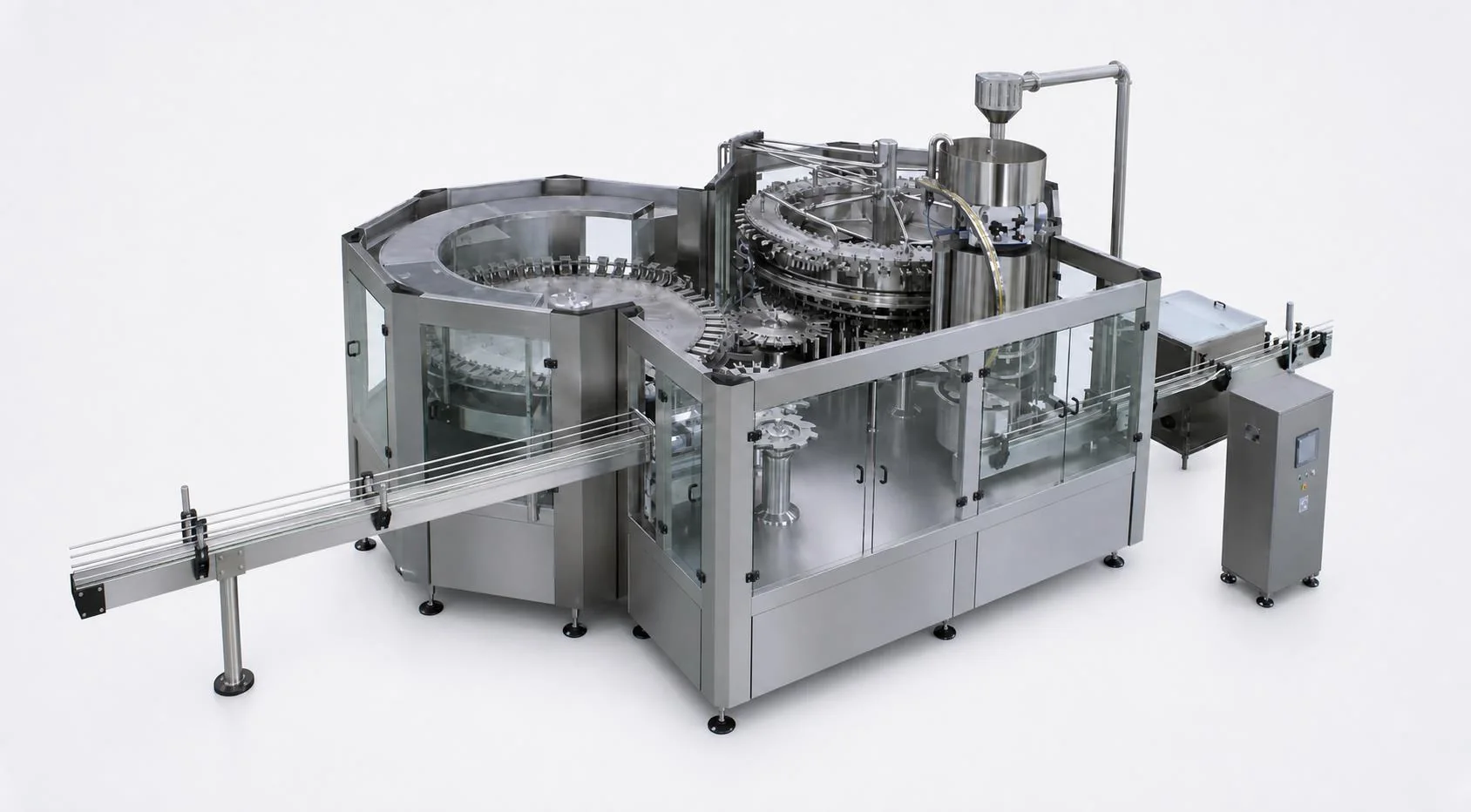
Rotary isobaric filling machine for carbonated beverage bottles
Carbonated beverage isobaric fillerCounter-pressure filling equipment reference for carbonated beverage projects.
01

Select by product condition

Confirm carbonation, viscosity or particulates, filling temperature, preservation route and hygiene requirement before choosing a filling principle.

  • Ambient, hot or cold condition
  • Still or carbonated
  • Product characteristics
  • Cleaning and sanitation requirement
02

Select by package and closure

PET, glass and cans require different transfer, closure and inspection logic. A similar capacity does not make the equipment interchangeable.

  • Container dimensions
  • Neck finish, cap or can end
  • Container pressure and temperature suitability
  • Changeover family
03

Define the acceptance boundary

The rated filler output is not the same as stable saleable line output. Agree the reference SKU, test material, duration, rejects, stops and measurement boundary.

  • Reference container
  • Good-output definition
  • FAT conditions
  • Connected-equipment responsibility
Equipment dependency

Read the page as a connected equipment graph.

Every equipment decision has an upstream condition, a current function and a downstream handoff.

01Upstream

Prepared product and stable empty containers must arrive within the confirmed operating window.

02Current equipment

Rinse, fill and close or fill and seam using the project-specific method.

03Downstream

Transfer, inspect, treat when required, label and pack without destabilizing the container.

Evidence boundary

Catalog reference where supported. Project confirmation where required.

The supplied Allot Tech 2026 catalog supports named equipment groups such as water treatment, beverage preparation, CIP, bottle handling, filling platforms, labeling, conveying and secondary packaging. It does not make every module mandatory for every project.

VERIFIED

Company identity, contact route, named equipment categories and catalog reference flows.

REFERENCE

Application routes and model-family context from the supplied catalog.

REQUIRES CONFIRMATION

Output, power, dimensions, materials, components, process conditions, availability, price and service scope.

PROHIBITED

Invented performance, price, certifications, projects, reviews, factory claims or guarantees.

Buyer questions

Frequently asked questions

These answers frame the equipment decision. The final process and equipment remain project-specific.

Is a monoblock a complete beverage line?

No. It combines core container rinsing, filling and closing functions but still depends on upstream, downstream and utility systems.

Are catalog model values final specifications?

No. Catalog values are reference data; the quotation and signed technical agreement confirm the final model and specification.

Next purchase decision

Send the known facts. Keep every unknown visible for technical confirmation.

Request Filling-Route ReviewTalk About My Project →