Operated by Allot Tech (Suzhou) Co., Ltd.
Equipment selection & integration

Beverage Filling Equipment, Organized by Production Stage

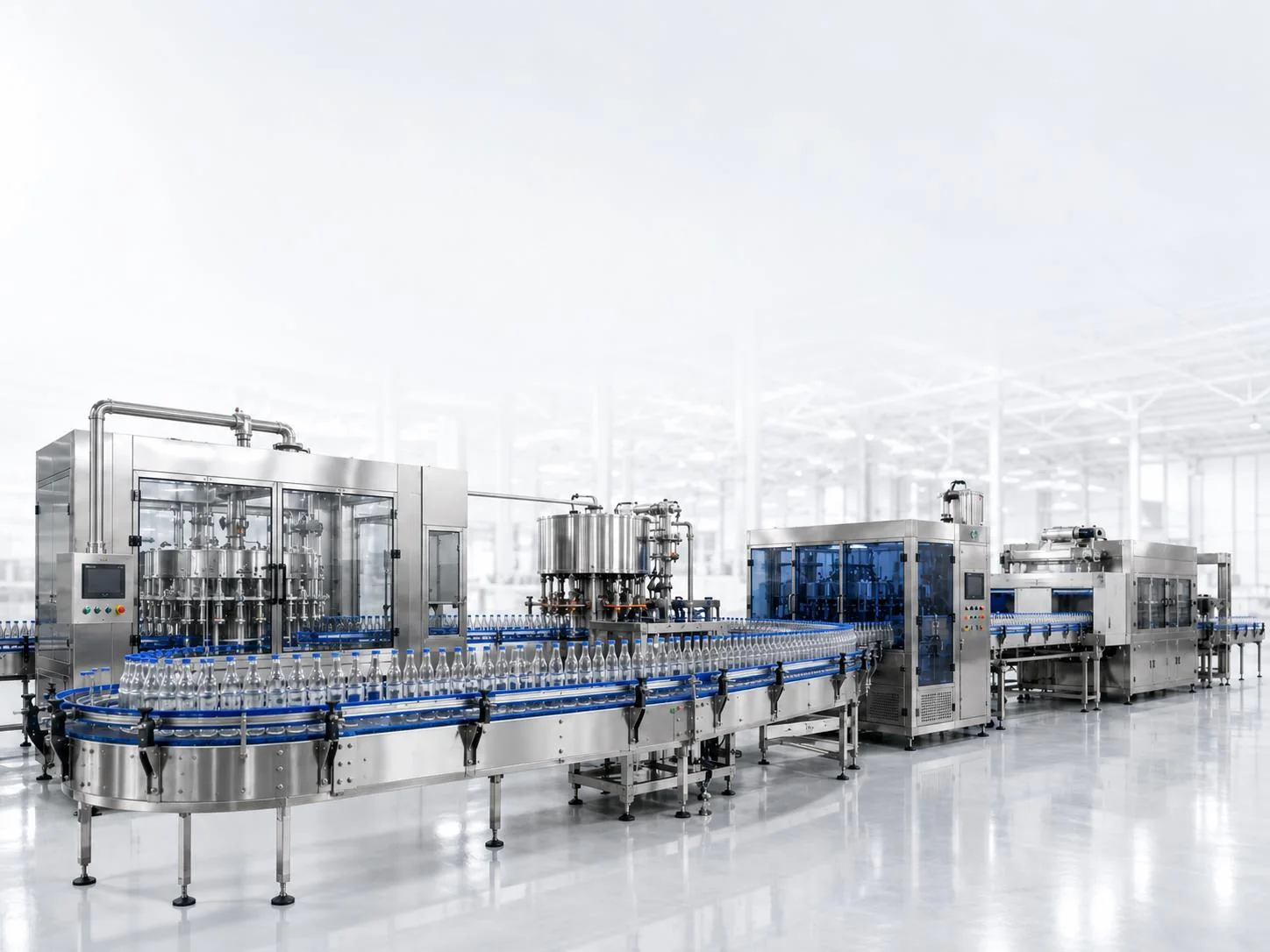
A usable equipment list starts with the beverage and container, then connects preparation, container handling, filling, inspection, labeling, packaging and utilities. It is not a fixed catalog bundle.

Direct answer

What does a complete beverage filling equipment scope include?

It includes every required production module plus the interfaces, utilities, controls, tests and buyer-supplied items needed to connect those modules into one operable project.

01

Map the product path first

Identify product-water treatment, ingredient handling, mixing, filtration, carbonation or thermal processing before choosing the filling center.

  • Raw-water and ingredient evidence
  • Product condition at filler inlet
  • Cleaning boundary
  • Required process hold points
02

Map the container path separately

PET bottles, glass bottles and cans have different preparation, transport, inspection and closure requirements before they meet the beverage at filling.

  • Bottle drawing and neck finish
  • Can and end specification
  • Purchased container or in-house blowing
  • Empty-container handling
03

Close the downstream and utility gaps

Labeling, coding, packing, pallet handling, compressed air, steam, cooling and line controls can limit or delay a project even when the filler is correctly selected.

  • Commercial pack format
  • Buffer and accumulation logic
  • Utility capacity
  • Control and safety interfaces
50 search-intent guides

Find the equipment decision your project needs to close.

Each guide owns one buyer question and links it to inputs, interfaces, scope boundaries and the next related decisions.

Project planning
Water and product preparation
Container preparation
Filling and closure
Labeling, packing and pallet handling
Line integration and delivery
Equipment dependency

Read the page as a connected equipment graph.

Every equipment decision has an upstream condition, a current function and a downstream handoff.

01Upstream

Water and beverage preparation must deliver the confirmed product condition.

02Current decision

Choose mandatory, conditional, optional and buyer-supplied equipment.

03Downstream

Inspection, labeling and packing must accept the real container and good-output target.

Evidence boundary

Catalog reference where supported. Project confirmation where required.

The supplied Allot Tech 2026 catalog supports named equipment groups such as water treatment, beverage preparation, CIP, bottle handling, filling platforms, labeling, conveying and secondary packaging. It does not make every module mandatory for every project.

VERIFIED

Company identity, contact route, named equipment categories and catalog reference flows.

REFERENCE

Application routes and model-family context from the supplied catalog.

REQUIRES CONFIRMATION

Output, power, dimensions, materials, components, process conditions, availability, price and service scope.

PROHIBITED

Invented performance, price, certifications, projects, reviews, factory claims or guarantees.

Buyer questions

Frequently asked questions

These answers frame the equipment decision. The final process and equipment remain project-specific.

Does every project need all listed equipment?

No. The required modules depend on product, container, output, factory conditions and existing assets.

Can one supplier quote from only a capacity number?

Only a preliminary and incomplete scope. Container, beverage, pack, utilities and site conditions are also needed.

Turn the page into a project brief

Send your beverage, container and output for a configuration review.

Send project requirementsWhatsApp Allot Tech →